
How Can You Spot Roof Leaks Early?

Last Updated: November 11, 2026
Quick Summary
Spot roof leaks early by checking ceilings and upper walls for yellow, brown, or gray stains, especially after storms. Look for bubbling paint and musty odors, then confirm the source in the attic, where water paths and damp or stained wood show where it enters.
Check ceilings below valleys, roof joints, vent pipes, and skylights after every heavy storm.
Bubbling or peeling ceiling paint often means moisture is pushing up from the roof.
Use a bright LED flashlight or headlamp and wear a dust mask when inspecting the attic.
Press a screwdriver into suspicious rafters; wood that accepts the tip easily has likely been wet for a long time.
Mark wet attic areas with painter's tape and take dated photos to track whether the leak worsens.
Table of Contents
Start With Warning Signs Inside the Home
Most roof leaks show up inside the house long before a homeowner sees water on the floor. Early signs like these are worth catching, since small repairs cost far less than major ones. Start your check indoors, where small changes are easy to miss.
Ceiling and Wall Stains
A ceiling stain is often the first clue. Look for yellow, brown, or gray rings on ceilings and upper walls, especially near corners, light fixtures, and exterior walls. A stain that grows after rain is a strong sign of an active roof leak.
Check these spots after every heavy storm:
Ceilings below valleys and roof joints
Areas around vent pipes and skylights
Upper corners of exterior walls
Bubbling or Peeling Paint and Musty Odors
Paint that bubbles, blisters, or peels on a ceiling often means moisture is pushing up from above. A musty smell in a room with no obvious source can also point to dampness in the attic or wall cavity. Trust your nose and your eyes: both signs deserve a closer look.
How to Find a Roof Leak from the Outside
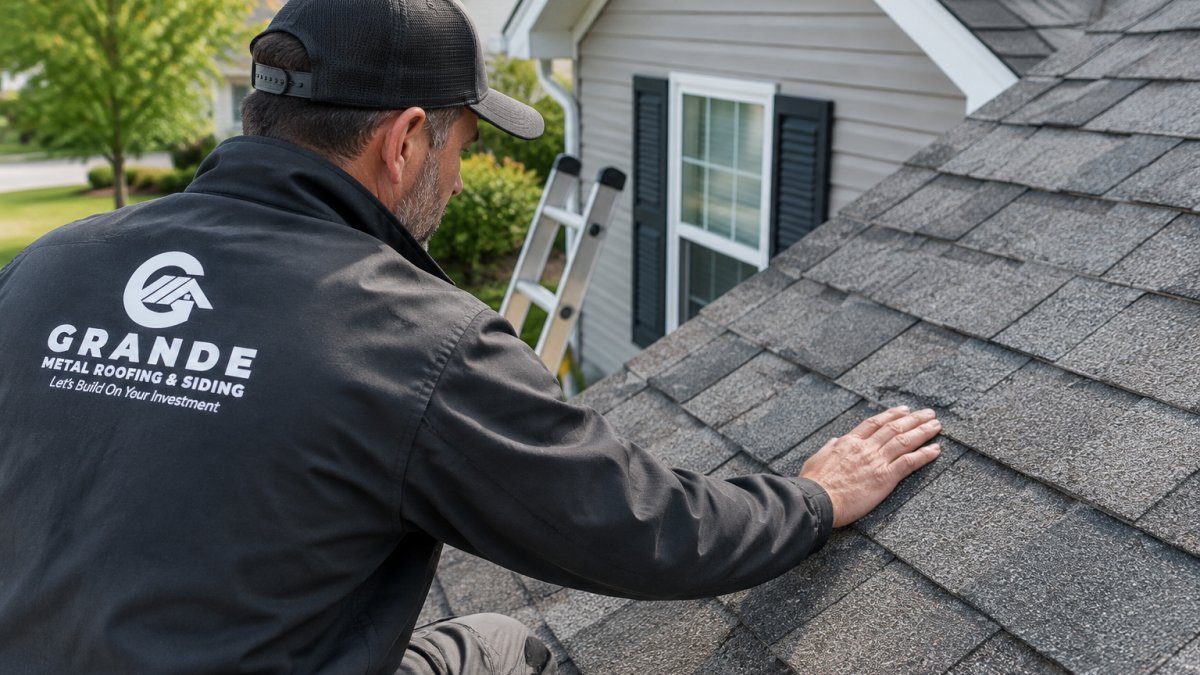
Walk around the outside of your home with a pair of binoculars. Look for shingles that are missing, cracked, curled, or lifted at the edges. Check the metal flashing around chimneys, vents, and valleys for gaps or rust. Look at the gutters too. Granules piling up in them can signal aging shingles that are losing protection.
Stay on the ground for this check. Never climb onto a steep or wet roof to look for leaks.
How to Find a Roof Leak in the Attic
The attic shows you the leak's path before the water reaches the ceiling, which makes it the most useful place to confirm a suspected leak. Go up during daylight with a bright LED flashlight or a headlamp so your hands stay free.

Work through the attic in a set order. Start at the spot directly above the ceiling stain, then move outward along the rafters and roof deck in a grid, so you don't skip areas. Look at the underside of the roof sheathing for dark, water-shaped stains, rings, or spots of mold.
Insulation tells you how the water moved. Fiberglass that is matted, compressed, or discolored near the roof deck usually means water sat there for a while. Blown-in cellulose that has clumped or turned dark is a strong sign of repeated wetting. Light that shines through gaps around vent pipes, chimneys, or roof penetrations shows a path water can use.
To tell an active leak from an old stain, look for signs of recent moisture. Active leaks tend to leave wet or still-damp materials, fresh staining with defined edges, and water beads or drips on wood or pipes. Old stains are usually dry, faded, and tide-marked, with dust or insulation fibers stuck to the discoloration. A moisture meter helps here.
Remember that water rarely drips straight down. It often runs along a rafter, a nail, or a sheathing seam before it appears on the ceiling, so the source may be several feet from the stain. Mark the wet area with a piece of painter's tape and take a photo with the date visible.
Watch out: Do not step on the attic floor between joists or on insulation alone, because the ceiling below can give way.
The table below summarises the key attic checks and what each sign usually means.
Check | What it shows | Note |
Roof sheathing underside | Dark, water-shaped stains or mold | Look directly above the ceiling stain first |
Rafters and top plates | Darkened or soft wood | Press a screwdriver into suspicious areas |
Matted or discolored insulation | Water sat there for a while | Check near the roof deck |
Light through gaps | Path water can use | Around vents, chimneys, penetrations |
Damp, fresh stains with defined edges | Active leak | Wet materials and drips mean recent moisture |
Dry, faded, tide-marked stains | Old leak | Dust or insulation fibers stuck to discoloration |
Moisture meter reading | Compare wet framing to dry wood | Use a pin-type meter on framing |
Painter's tape and dated photo | Tracks whether the leak worsens | Mark the wet area before you leave |
Roof Leaks in Heavy Rain and Storms
Storms reveal leaks that stay hidden in dry weather, because wind-driven rain pushes water sideways and upward under shingle edges, through nail holes, and into gaps around flashing. A leak that appears only during a storm often points to a damaged or lifted component rather than general roof wear.
Use a repeatable post-storm routine. Wait until the rain has stopped and it is safe to be inside, then check in this order:
Inside the home, walk each room with a flashlight and look at ceilings, upper walls, and the tops of closets.
Check the attic while water may still be moving, since drips are easiest to track in real time.
Look at the outside from the ground for shingles that are displaced, torn, or missing, and for debris or granules in the gutters.
Photograph anything you find, with the date and time visible, and note the rainfall and wind direction if you know them.
Distinguish a roof leak from other sources. Water that appears only during rain, and near a roof valley, skylight, chimney, or vent pipe, is most likely a roof problem. Water that shows up at any time, follows a pipe run, or sits near a bathroom or kitchen wall may be plumbing. Damp patches on the cold surfaces of a room, especially on exterior walls with no visible water trail, are often condensation from humidity rather than a leak. A simple test is to wipe the spot and watch whether it returns within a few hours during rain or after a shower.
Decide how urgent the situation is. Call a roofer promptly if water is actively dripping, if a ceiling is bulging or sagging, if you see water near electrical fixtures or outlets, or if the leak has spread to a new room. For a fuller list of warning signs that need quick action, read how to spot signs your roof needs urgent repair. Turn off power to the affected fixtures if water reaches them. Place a bucket or tarp under the drip, and move valuables away from the area.
Watch out: Do not walk on a wet roof or climb a ladder in high winds to inspect shingles. Document the damage from the ground and from inside, and let a professional handle anything on the roof surface.
Booking a Roof Inspection with Grande Roofing
If you spot any of these signs, a professional inspection is the next step. Read professional roof leak repair in Uniontown, PA to see how local leak repair is handled. Grande Roofing serves homeowners in Uniontown and Fayette County, and a professional inspection can help pinpoint where water is getting in. You can also browse the Grande Metal Roofing & Siding blog for more local roofing guidance. Call Grande Roofing to schedule an inspection, and get a clear plan before small leaks turn into big repairs. If you are still comparing options, roofing contractors in Fayette County, PA includes a checklist of what to ask before you sign.
Frequently Asked Questions
What are the early signs that my roof is leaking?
The earliest signs usually appear inside the home. Look for yellow or brown ceiling stains, bubbling or peeling paint on upper walls, and a musty smell in upper rooms. Check the attic for damp insulation, water trails on rafters, and dark spots on roof decking. Outside, look for missing, cracked, or lifted shingles and damaged flashing around vents and chimneys. Catching these signs early keeps a small repair from turning into structural damage.
How long can a roof leak go unnoticed?
A slow leak can stay hidden for months, sometimes longer, because water often travels along rafters or insulation before it shows up as a stain. Repeated wetting causes wood rot, weakened drywall, and mold growth, even when the damage is not yet visible. If you notice a stain that is growing, darker, or returning after it dried, schedule an inspection promptly rather than waiting for the next storm.
How do I check my attic for a roof leak?
Go into the attic during daylight with a flashlight and check after a rain if possible. Look at the underside of the roof decking and rafters for dark stains, water trails, or nail points with moisture. Feel the insulation for dampness and look for compressed or discolored areas. Compare what you find to the ceiling stains below to trace the leak back toward its source. Avoid stepping on insulation and keep your weight on the joists.
What should I do if my roof leaks during heavy rain?
Place a bucket or tarp under the drip and move valuables out of the way. If water is entering near a light fixture or electrical outlet, turn off power to that area at the breaker. Take photos of the stain and water pooling for insurance records. Once the rain stops, have a qualified roofer inspect the area so the leak source can be sealed or repaired before the next storm.

Comments